I had Snare & Tanner running on two different digital ocean’s droplets. I just wanted to see what juicy data I can get using this honeypot. How I deployed it is a different story and I’ll write a different blog post for that. In this post, I just wanted to share small code I wrote as well as some graphs I was able to generate using them.
Downloading data using Tanner API
Tanner doesn’t support any inbuilt export option(yet) but it has an API so I wrote a small python script to download data from my tanner API and store it in a JSON file.
The original download script is no longer available on GitHub. The original link is retained for reference.
Visualizing data
Ok, so now I had all the data from the tanner server in a file named tanner_9f7d7dd3-ac6b-468b-8cee-ce3e352eff6e.json. Then I used a library like pandas, matplotlib to generate some graphs. You can see the gist below that contains the code that I used to get some graphs. And before you scroll down just want to clear one thing, I am not an expert all this visualization with matplotlib and pandas(like @Ashish) so it’s possible that my method of cleaning the data, making data frames looks very odd to you. If you have any suggestions then please let me know.
The original plotting script is no longer available on GitHub. The graphs below are preserved locally.
Graphs
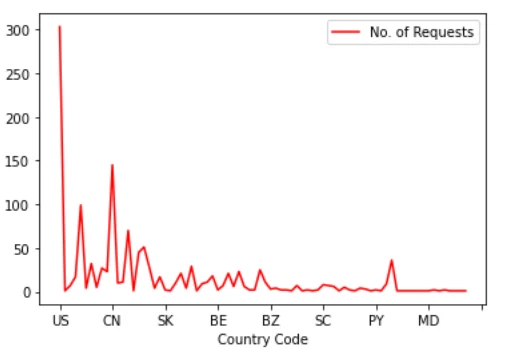
- Simple line graph showing number of requests made from various countries.
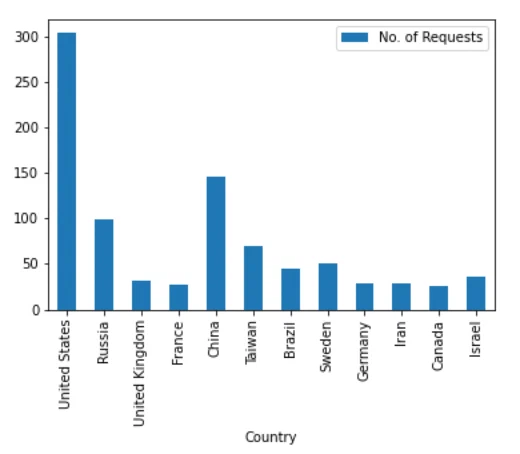
- Bar graphs on the same data set
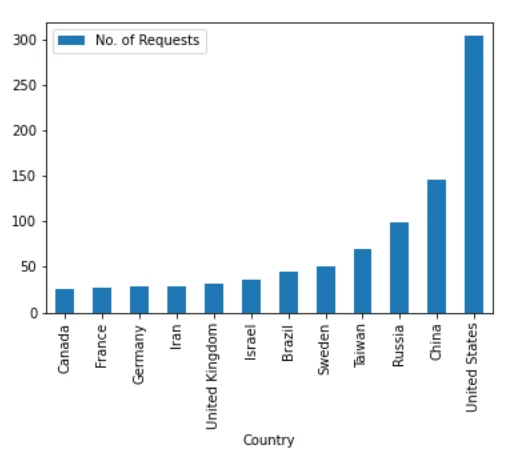
- Bar graph on sorted data
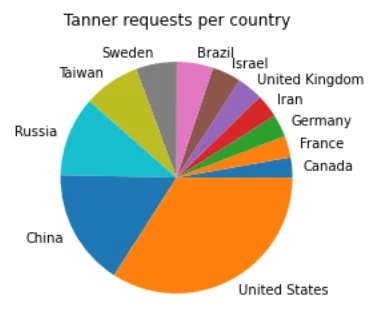
- Pie chart on country vs number of requests
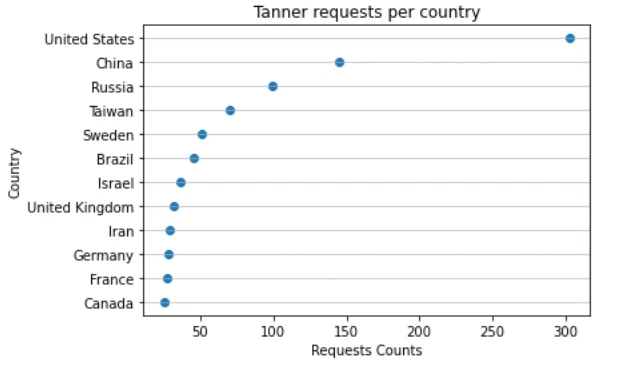
- Scattered graphs
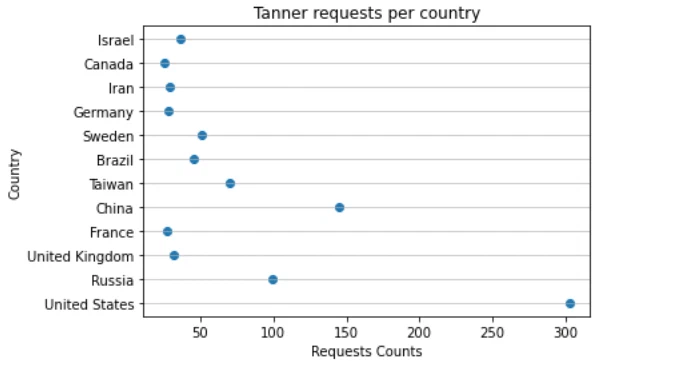
Sorted data set
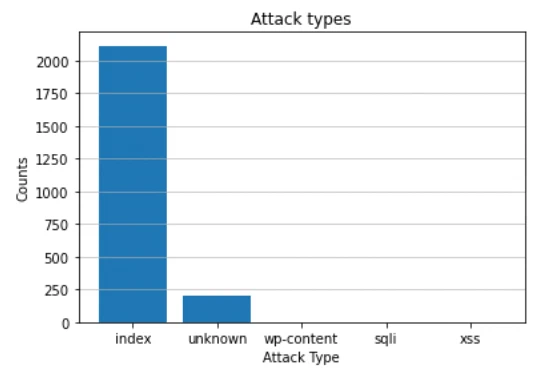
- Types of attack
That’s all, I think I learned a few new things today. oh and one of the cool things that I learned today was how to include gist in your blog posts. If you are using Jekyll for your blog then check out jekyll-gist. This plugin helps you embed gist in your GitHub pages easily.
Thanks for reading and if you have any suggestions about the code or anything else then let me know.